
Discover where demand for instant commerce is growing, which UK cities are leading adoption, and what it means for retailers and brands.
Inside the report
✓ UK consumer research with 2,050 respondents
✓ The UK’s first Instant Commerce Index
✓ City rankings for rapid delivery readiness
✓ Practical insights for retailers, brands and ecommerce leaders
The relationship between fulfilment and ecommerce is changing.
Among UK consumers, delivery speed is no longer influencing only what happens after a purchase, but is increasingly shaping whether the purchase happens in the first place.
Consumers are buying closer to the moment of need. Products are being discovered through recommendations rather than traditional search journeys. Faster fulfilment is becoming more visible within acquisition messaging and retailer positioning.
Taken individually, none of these shifts are entirely new. Together, they point towards something more significant.
The Instant Commerce Index explores how these shifts are reshaping modern retail behaviour. Based on research conducted among 2,050 UK consumers, the report examines how fulfilment speed is influencing product discovery, purchasing behaviour, retailer competition, urban fulfilment expectations and the commercial conditions needed for ultra-rapid delivery to scale.
For retailers, the opportunity is to understand how fulfilment speed can influence visibility, conversion, acquisition and long-term competitive advantage.
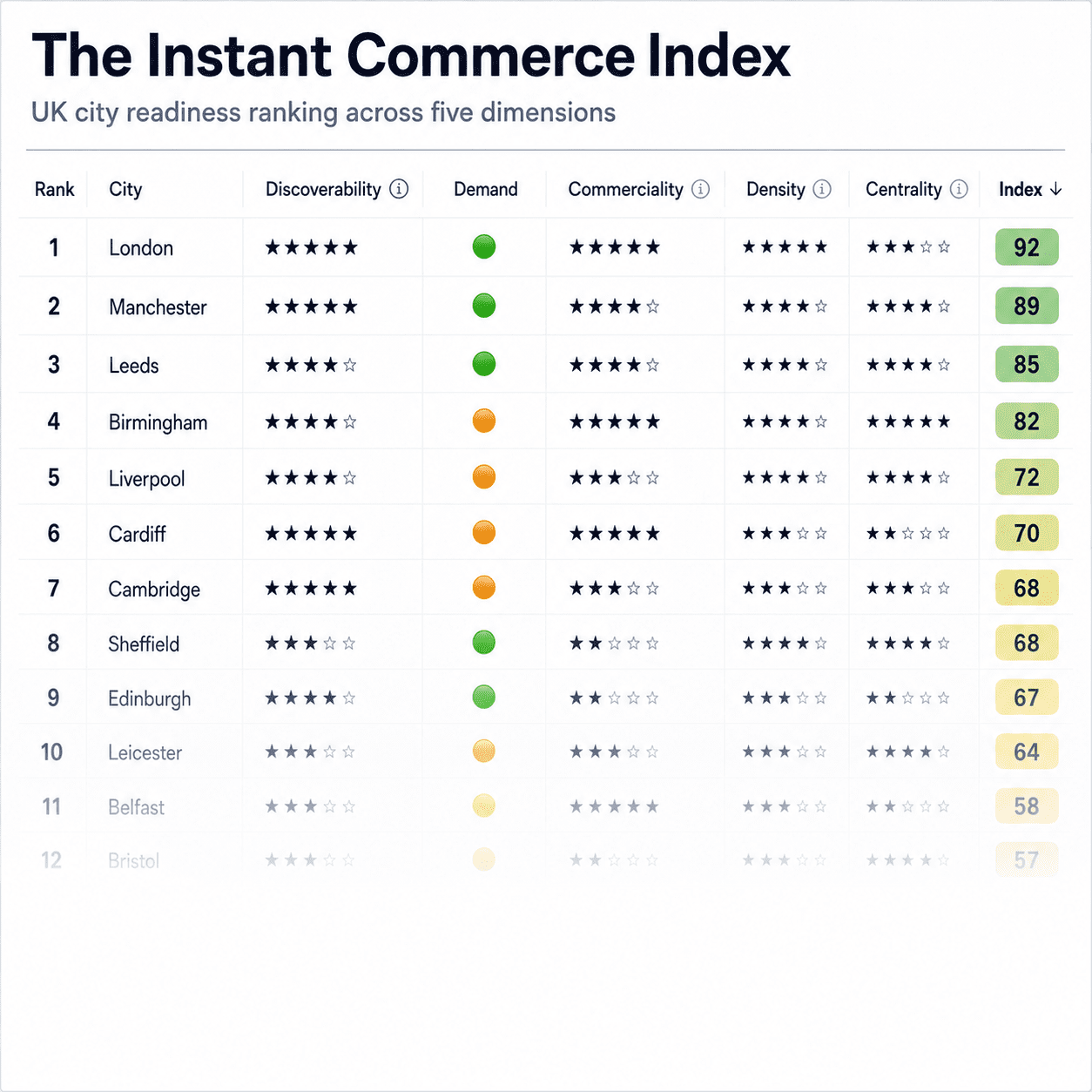
While these shifts are emerging across the UK, their intensity varies significantly by market. To identify where consumer demand and operational conditions are most aligned, Zippd developed the Instant Commerce Index. Combining consumer research with structural market factors, the Index highlights the cities best positioned for instant commerce adoption and deployment.
While consumer demand for faster fulfilment is growing nationally, adoption is unlikely to occur evenly. The markets best positioned for instant commerce combine strong consumer demand with the operational characteristics needed to make rapid fulfilment commercially viable.
Some cities combine stronger demand, greater willingness to pay and higher levels of digital shopping behaviour, while others benefit from the operational characteristics needed to make rapid fulfilment commercially viable.
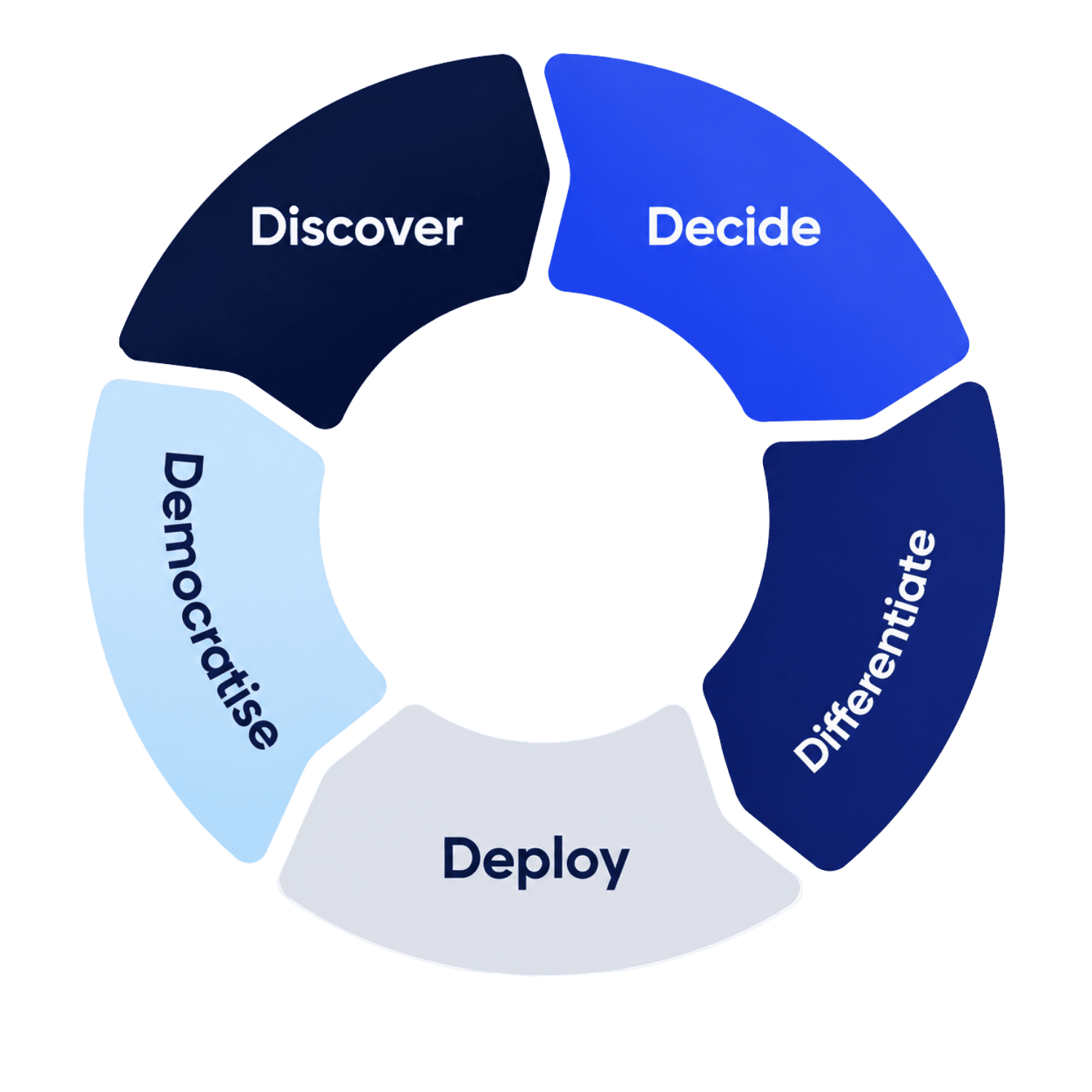
The Index is built using five dimensions:
Consumer signals account for 60% of the overall score, while operational factors account for the remaining 40%.
London ranks as the UK’s most instant-commerce-ready city, combining strong consumer demand, high levels of AI-assisted shopping behaviour and above-average willingness to pay for faster fulfilment.
Manchester and Leeds follow closely, demonstrating that some of the strongest opportunities for instant commerce adoption exist outside of the capital. Both cities combine high consumer demand with favourable operational characteristics, making them attractive markets for rapid fulfilment services.
Birmingham ranks as one of the UK’s strongest markets for instant commerce deployment. While consumer demand is slightly lower than some higher-ranked cities, Birmingham combines strong commercial readiness with exceptional geographic positioning, making it particularly attractive for scalable fulfilment operations.
A second tier of cities shows a wider national potential. Liverpool, Cardiff, Cambridge, Sheffield, Edinburgh and Leicester all sit within the 60-79 readiness band, suggesting that instant commerce is likely to scale through a network of high-potential city markets.
The Index also highlights a growing divide between where instant commerce is becoming commercially viable and those where adoption is likely to be slower. Urban density, consumer behaviour and operational accessibility all play an important role in determining where rapid fulfilment can scale most effectively.
Scores are indexed against the highest-performing city in the study. Consumer metrics are derived from research conducted among 2,050 UK consumers. Operational metrics are based on urban density and geographic accessibility indicators.
The Index highlights where instant commerce is most likely to gain traction first. To understand why some markets are more ready than others, the remainder of this report explores the five forces reshaping modern retail behaviour.
Together, these forces form the Instant Commerce Framework.
This framework explains the forces driving the gap between product discovery, purchase and delivery to shrink.

How AI-assisted shopping and recommendation-led commerce are changing product visibility

How faster fulfilment is influencing purchase timing and creating new retail occasions

How fulfilment speed is becoming a brand differentiator

How urban density and fulfilment infrastructure are accelerating adoption in specific markets

How pricing and accessibility will determine whether instant commerce becomes mainstream
As shopping becomes more recommendation-led, fulfilment speed is starting to influence which products are surfaced, considered and bought.
Historically, product visibility was driven primarily by brand strength, price, paid acquisition and merchandising. Recommendation-led commerce is now introducing new criteria into how products are surfaced and selected.
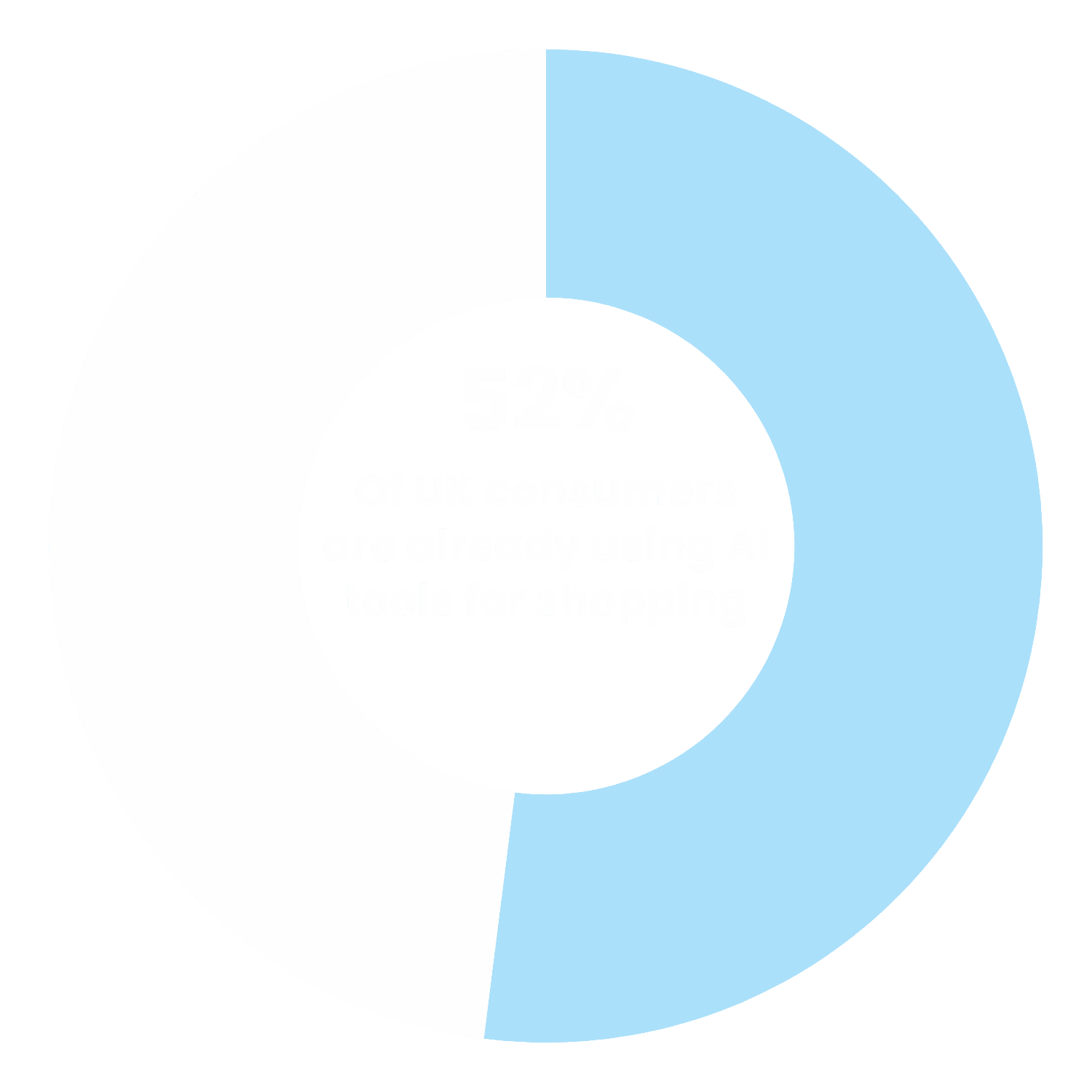
Over half of UK consumers have already used AI-assisted shopping tools, rising to 72% among consumers aged 25-34. With this rise, fulfilment capability is becoming more commercially important.
Products that are available, can be delivered quickly and within the required timeframe and are operationally reliable are more likely to be surfaced within recommendation-led shopping environments. For retailers, this creates a new competitive opportunity. Fulfilment speed and performance are directly influencing brand discovery and customer acquisition, not simply the post-purchase experience.
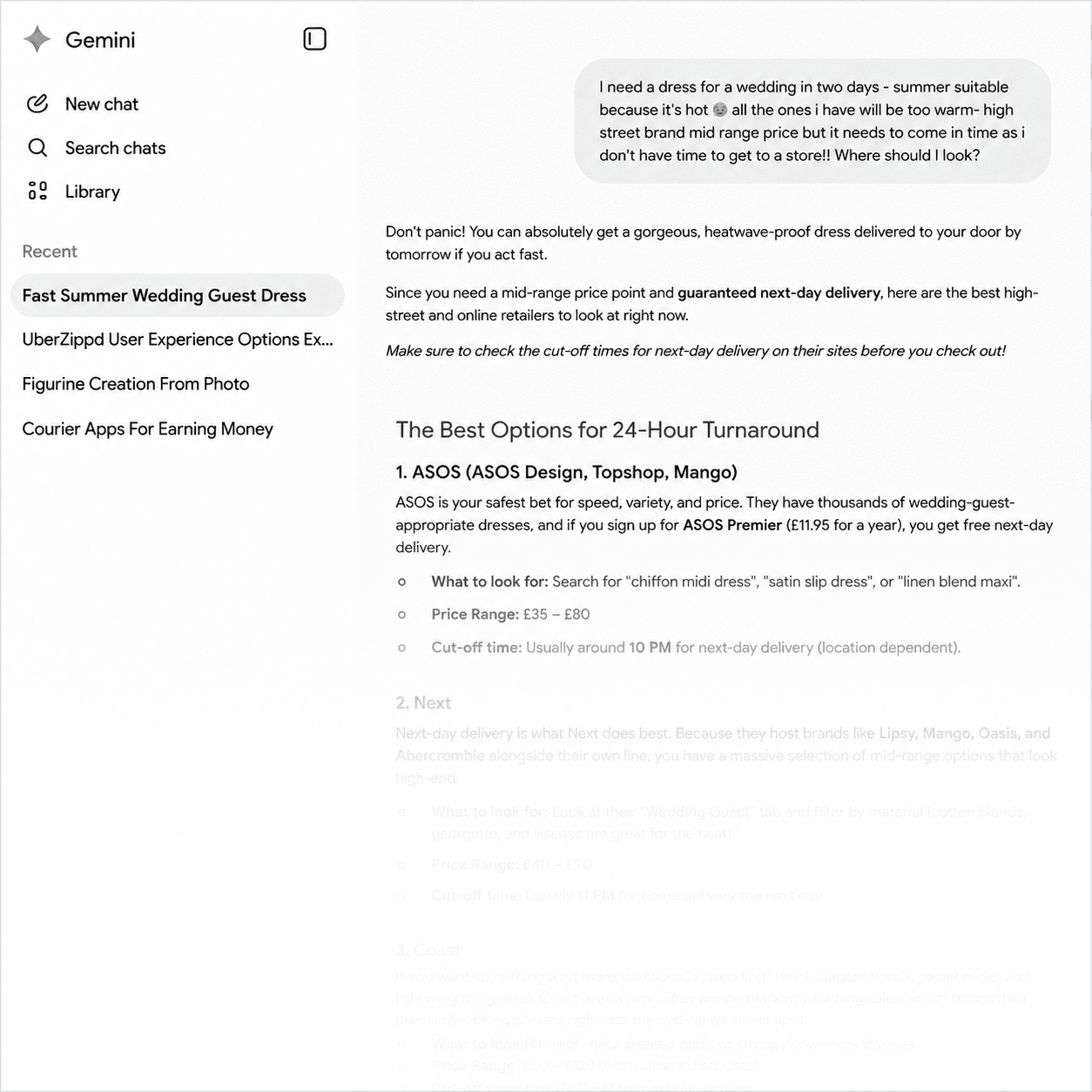
Recommendation-led shopping, where products are surfaced through algorithms, creators and AI-assisted suggestions rather than traditional search, is accelerating the shift towards curated discovery.
AI-assisted shopping is shortening the path from discovery to purchase by helping customers make faster, more confident buying decisions. The key change is that fulfilment capability is now becoming part of product discovery itself.
Products that can arrive within the required timeframe may be better positioned to satisfy the consumer’s immediate need state. Fulfilment speed is becoming an increasingly important factor in what gets surfaced, prioritised and ultimately purchased.
The scale of this shift is already becoming commercially significant:
Fulfilment is no longer purely downstream of the sale. Products that can be fulfilled quickly are increasingly better positioned within recommendation-led shopping environments.
Rapid fulfilment capabilities have long been difficult for many retailers to scale efficiently outside of specialist grocery and convenience models. Traditional carrier networks were largely designed around scheduled delivery windows rather than immediacy, limiting the ability for many brands to offer fast, flexible fulfilment at scale.
That infrastructure is now evolving.
More sophisticated rapid delivery networks, improved urban fulfilment capabilities, and greater operational flexibility are making ultra-rapid fulfilment increasingly accessible across a wider range of retail categories. This creates a significant commercial opportunity for retailers.
Retailers that can combine a strong product offering with flexible, reliable fulfilment are likely to become more commercially advantaged within recommendation-led shopping environments.
As consumers discover and choose products faster, fulfilment speed is becoming part of how retailers win visibility, consideration and conversion.

How retailers can respond
Zippd enables retailers to introduce ultra-rapid, same-day and next-morning delivery, helping products remain highly discoverable across channels.
Ultra-rapid fulfilment is changing when and why consumers buy, creating more opportunities for last-minute, impulse-driven and occasion-led purchases.
As fulfilment windows compress, consumers are making purchases closer to the moment of need. This is driving new forms of last-minute commerce across urgent replacements, forgotten items, social occasions and convenience-led purchasing behaviour.
The shift is creating more opportunities for immediate and impulse-driven purchasing behaviour, where fulfilment speed can directly influence whether a purchase happens at all.
Nearly one in three UK consumers say they are more likely to buy when same-day delivery is available, with younger consumers showing significantly stronger immediacy expectations and fast fulfilment increasingly driving impulsive purchasing behaviour, reinforcing the growing relationship between fulfilment speed and purchase timing.
Faster fulfilment is creating new retail occasions that may not have previously converted online, from forgotten travel items and urgent work accessories to last-minute gifts, weather-led purchases and event-driven fashion or beauty needs.
For retailers, this represents more than a customer experience improvement. Ultra-rapid fulfilment may create opportunities to capture demand that previously may never have converted because delivery timelines failed to align with the consumer’s immediate need state.
The behaviour shift is strongest among younger consumers, where fulfilment speed is more closely tied to purchasing decisions and retailer choice. Nearly half of consumers aged 25-34 say same-day delivery makes them more likely to purchase, while almost one in four would switch retailers for faster delivery.
Instant commerce is extending beyond groceries into categories where urgency, convenience and occasion-led purchasing influence behaviour. Electronics, fashion and beauty are emerging as particularly strong opportunities because they align with impulsive, occasion-led and replenishment purchasing behaviour.
Electronics has emerged as the leading ultra-rapid retail category after groceries, with 32% of UK consumers saying they would be more likely to purchase if 2-hour delivery was available, rising to 41% among consumers aged 25-34. Fashion follows closely at 34%, while beauty reaches 24%. Demand is significantly higher among 25-44-year-olds across all three categories.
These categories are closely connected to occasion-led and replenishment-driven purchasing behaviour, where the value of the product is often highest within a short timeframe. The findings suggest delivery speed is becoming part of the purchasing decision itself.
Products tied to immediate needs, time-sensitive occasions and convenience-led purchasing behaviour are particularly well-positioned for compressed delivery timelines.
How retailers can respond
Zippd combines later cut-off times, reliable fast fulfilment and smarter visibility and delivery windows to help brands convert intent with confidence.
Alongside the growing importance of fulfilment speed in recommendation-led and AI-assisted commerce, retailers are no longer using delivery experience solely as a retention mechanism. Fulfilment capability is becoming an increasingly important part of customer acquisition and competitive positioning too.
Delivery messaging is becoming more visible across GTM strategies as retailers compete not only on product, price and brand preference but on how quickly they can place products into customers’ hands.
Historically, delivery speed has been difficult for many retailers to communicate as a point of differentiation because service levels were relatively similar across the market. As fulfilment windows compress, that is beginning to change. Retailers are increasingly able to use speed as part of their customer proposition, particularly in categories where immediacy, urgency and convenience are influencing purchasing behaviour.
Nearly one in three UK consumers say they are more likely to buy from a retailer that offers same-day delivery, while 19% would switch retailers for significantly faster delivery. Among consumers aged 25-34, switching appetite rises further, reinforcing how fulfilment capability is becoming more commercially influential for younger, urban shoppers.
For retailers, fulfilment capability increasingly sits alongside price, assortment and brand as part of the overall customer proposition. As delivery expectations rise, speed may increasingly become another factor influencing customer acquisition rather than simply retention.
Target promotes same-day delivery as a lifestyle convenience proposition across a wide range of categories.
Sephora connects same-day delivery to occasion-led and immediacy-driven beauty purchases, leveraging influencers to promote.

Argos has made same-day fulfilment part of its core retail proposition through ‘Fast Track’
Coupang’s ‘Rocket Delivery’ positions delivery speed as a defining platform feature, including dawn and same-day delivery.
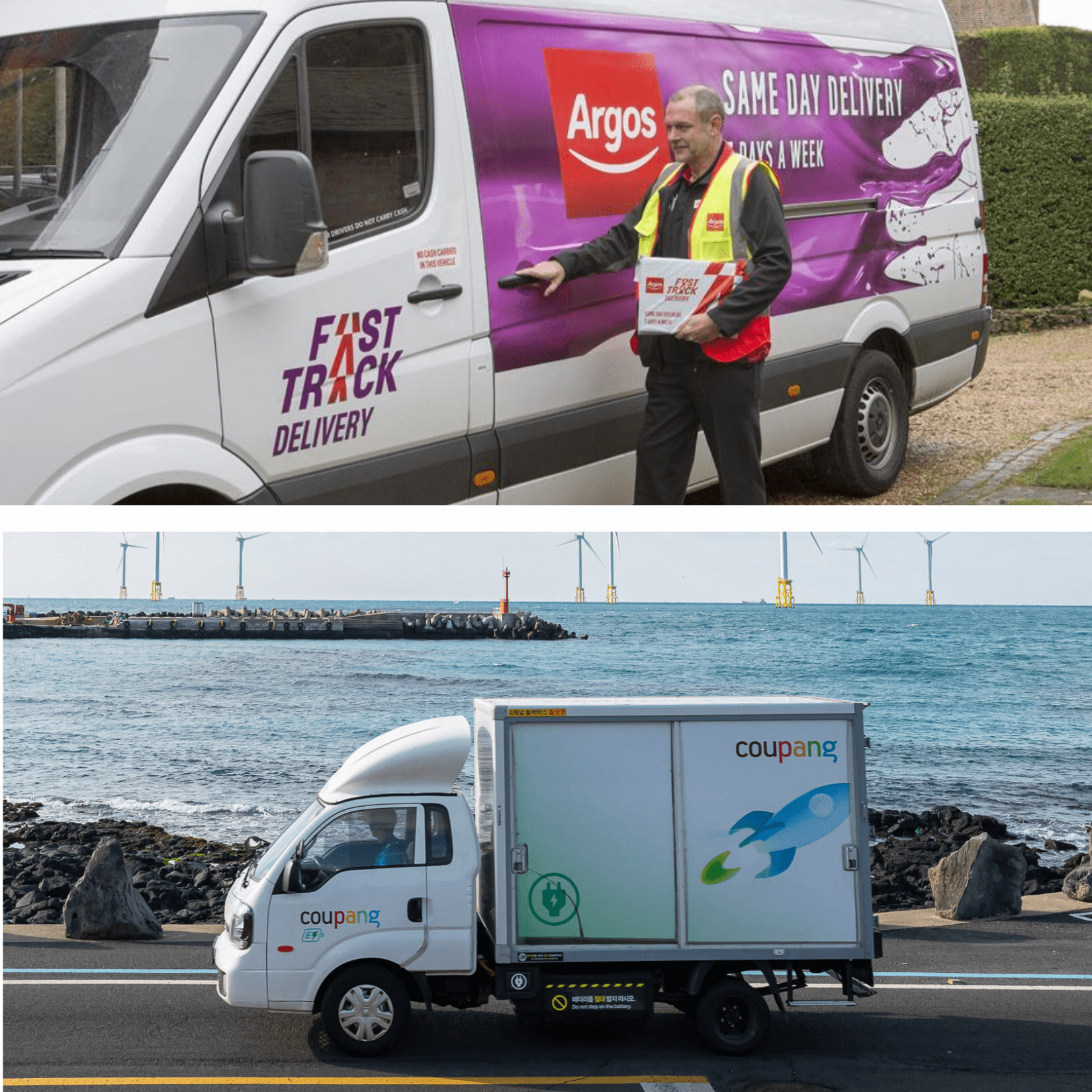
As delivery windows compress, retailers are increasingly competing on how quickly they can place products in consumers’ hands, not just the products themselves.
In 2023, McKinsey described same-day delivery as an “urban pursuit”, arguing that population size and density are critical to making faster fulfilment models viable at scale5. Our research supports this view and suggests the same dynamics are beginning to extend into ultra-rapid fulfilment and instant commerce.
Major cities concentrate demand, inventory and delivery infrastructure within shorter distances. This makes it easier for brands to connect digital discovery with near-immediate fulfilment, and to test faster delivery propositions in markets where customer density can support the model.
As faster fulfilment becomes more accessible in major urban areas, with shorter delivery windows, greater convenience and more immediate retail experiences, consumer expectations may evolve alongside it.
In the context of this research, major UK cities should therefore be viewed not simply as regional markets, but as indicators of how fulfilment infrastructure can reshape retail expectations over time.
showing the strongest same-day purchase intent of UK cities
putting it in the lead for product discovery among UK cities
for same-day purchase intent
For retailers, dense urban markets offer a practical environment to test how faster fulfilment changes customer behaviour. The Instant Commerce Index highlights how these dynamics are already developing across the UK, although the pace and shape is likely to vary by market. Birmingham demonstrates a stronger willingness to pay and switching risk, while Manchester shows the strongest same-day purchase intent. London combined the highest AI-assisted discovery with high-intent retail behaviour.
This makes major cities useful test markets for new fulfilment propositions, from evening same-day delivery to sub-2-hour offers tied to high-excitement and urgent purchases.
The implication is that urban fulfilment should not only be viewed as a logistics model; it is a way for retailers to understand how speed can influence conversion, acquisition and expectations for their customer base before these behaviours become widely normalised.
As faster fulfilment becomes more operationally achievable in dense cities, consumer expectations around speed and convenience are evolving alongside it.
How retailers can respond
Zippd’s hyperlocal network connects micro-hubs across five major UK cities, enabling brands to extend rapid fulfilment beyond London to other areas where demand is highest.
Consumer demand for faster fulfilment is clear, but long-term adoption is likely to depend on how accessible those services become for both retailers and consumers. The research suggests shoppers are willing to pay for speed when pricing remains aligned to familiar delivery expectations, creating an opportunity for retailers to introduce faster fulfilment without positioning it as a premium service.
The research shows little difference in willingness to pay between marketplaces and high-street retail brands. Nationally, one in five consumers aged 44 years or below would pay over £5 for same-day, and next morning by 12 pm delivery from any retailer, and over 60% of all consumers are willing to pay more for this type of delivery overall.
For retailers, the opportunity is to make faster fulfilment feel like a natural extension of the shopping experience, rather than a specialist add-on. That places new importance on fulfilment partners that can support faster delivery without pushing customer pricing beyond familiar expectations.
The closer fulfilment moves towards the point of decision, the more important accessibility becomes. If speed remains confined to premium-priced services, adoption is likely to remain limited. If it becomes accessible enough to feel like a natural part of online shopping, the implications for retail behaviour could become much broader.
Consumers are willing to pay for faster delivery, but mainstream adoption will rely on pricing models that feel proportionate to everyday retail behaviour.
How retailers can respond
Zippd unlocks existing on-demand courier capacity across UK cities, rather than employing an owned fleet. By unlocking existing urban mobility, rapid delivery can be launched with a much faster speed-to-market whilst becoming commercially viable at everyday retail pricing.
The Instant Commerce Index is based on Zippd’s research conducted among 2,050 UK consumers in May 2026 in partnership with Research Without Barriers.
The sample was nationally representative by age, gender and region, with additional analysis conducted across major UK cities to identify geographic differences in consumer attitudes towards fulfilment speed, AI-assisted shopping and willingness to pay for faster delivery.
The findings in this report reflect consumer sentiment at the time of fieldwork and should be interpreted as indicative of current behaviour and attitudes within the UK market.
The Instant Commerce Index combines consumer research with operational indicators including urban density and geographic centrality to assess market readiness for instant commerce adoption.
The findings in this report suggest that fulfilment is becoming a more influential part of the retail proposition.
Consumers are buying closer to the moment of need, recommendation-led shopping is changing how products are discovered, and faster delivery is creating new purchasing occasions.
Together, these shifts suggest that delivery speed is becoming increasingly connected to how demand is generated, not simply how orders are completed. As fulfilment infrastructure improves, faster delivery is also extending beyond groceries and convenience into fashion, beauty, electronics and other high-intent categories where immediacy can influence purchasing behaviour.
The opportunity for retailers will not be the same in every market, category or customer segment. For some, speed may support conversion. For others, it may improve competitiveness, unlock new purchasing occasions or strengthen customer acquisition. The Instant Commerce Index highlights where these dynamics are already developing across the UK, showing that consumer demand, willingness to pay and operational viability are not evenly distributed but the markets furthest ahead offer a useful indication of where instant commerce adoption is likely to accelerate first.
For retailers, the challenge is turning these insights into a commercially viable delivery proposition. While consumer expectations continue to evolve, building rapid fulfilment capabilities has traditionally required significant investment and operational complexity.
Zippd helps retailers respond to that challenge by providing access to same-day and next-morning delivery with later cut-off times, smarter tracking, delivery windows and a more cost-efficient model, through a scalable technology platform and delivery network.
Rather than replacing existing fulfilment operations, it enables brands to introduce faster delivery where it can create the greatest commercial impact, helping translate changing consumer expectations into a competitive advantage.
Talk to us about how Zippd can help you introduce faster delivery through a scalable technology network.